Foodservice manufacturers are heading into 2027 with steady demand and tight margins. IFMA’s 2027 forecast expects total operator spending across food-away-from-home segments to grow 0.9% in real terms (4.2% nominal), while costs keep pressing on each part of the supply chain. As Brian Choi, CEO of The Food Institute, put it in our 2027 report: “That squeeze doesn’t stay at the operator. It moves upstream.”
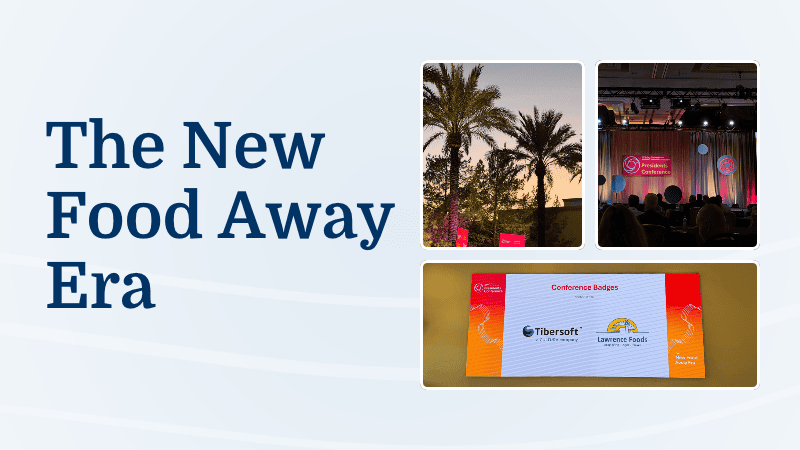
That backdrop shaped this year’s IFMA Presidents Conference in Scottsdale, built around the New Food Away Era. In his opening remarks, IFMA President and CEO Phil Kafarakis described a market where the boundaries between manufacturers, distributors, operators, and emerging channels matter less, and the interdependence among them matters more. This year’s conference was a special one for our team. Chris Hart, Suzanne Cwik, Angela Cummings, and I got to spend time with friends and partners we’ve worked alongside for years, and we got to congratulate Angela on officially joining IFMA’s 2027 Next Gen Execs cohort, a year after Suzanne completed the program herself.
What we heard in Scottsdale
Across the sessions and conversations at the conference, a few themes came up again and again. Briggs Briner of PwC said he expects nominal growth next year, but once inflation is taken out, volume looks essentially flat to slightly positive. With that outlook, growth depends on knowing which operators, segments, and locations to focus on, and on giving sales teams guidance they can act on. The same idea was echoed at an executive roundtable on growth, where the group noted that getting on contract is an early step. From there, a product still needs to get onto the distributor’s order guide, be stocked in each distribution center, and be pulled through to the operator.
Where trade spend fits
Trade spend sits right in that gap between the agreement and the operator. Manufacturers fund GPO rebates, distributor billbacks, and direct deals to win business, and most have spent years building strong programs with those partners and the trade spend management processes to run them. The open question for many teams is whether each investment reached the operators it was meant to reach and influenced what they bought.
Suzanne and Art Bell of Kinetic12 talked this through on a recent Food Institute Podcast episode, Beyond the Data: What Really Drives Foodservice Sales? As Suzanne put it:
“Even if I don’t overpay a dollar, I may make the wrong commercial decision because I misunderstood what truly drove the growth.”
Art added that sales leaders are moving past catching double dips and asking which investments will drive growth. That shift fits what we heard in Scottsdale: in a flat-volume market, the next dollar has to go where it can change what operators buy.
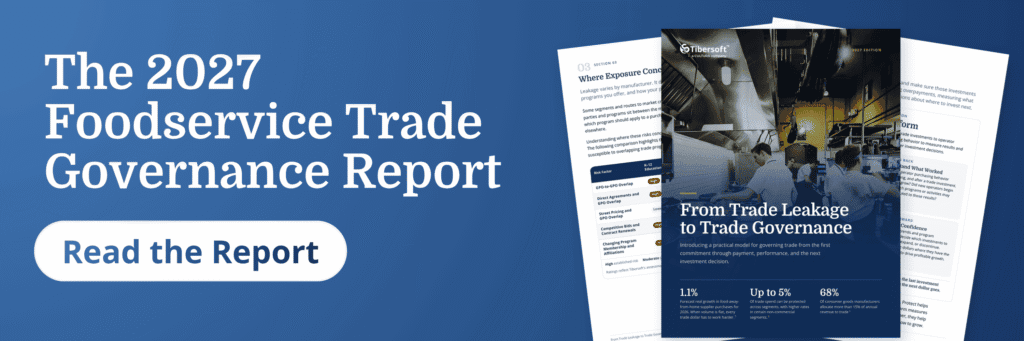
Getting the next dollar to the right place takes more than tracking claims and payments. For a foodservice manufacturer, trade is a significant commercial investment. Knowing what each investment produced at the operator is how you protect margin, defend the programs that work, and put the next dollar where it can grow volume. That’s the case our 2027 Foodservice Trade Governance Report, From Trade Leakage to Trade Governance, published October 20, 2026, makes for trade governance: connecting each trade investment to what happened at the operator, so manufacturers can protect the dollar, understand what it produced, and make the next investment with greater confidence. When volume is flat, each trade dollar has to work harder, and that connection becomes the basis for better decisions. In the report’s model, trade governance has two jobs: protect trade spend and make sure those investments deliver results.
- Protect works before and after payment: evaluate proposed deals against existing programs at the operator-location level, flag duplicate funding before payment, and recover confirmed overpayments.
- Perform measures trade promotion effectiveness at the operator: it compares purchasing behavior before, during, and after a trade investment, then uses what worked to decide which investments to continue, adjust, expand, or discontinue.
Both start with reliable operator-location intelligence. From there, clear rules for how trade dollars should be paid, workflows to apply those rules, foodservice expertise for the judgment calls, and shared practices across teams turn that intelligence into governance a team can run day to day.
Explore the 2027 Foodservice Trade Governance Report
If Scottsdale left you thinking about where your next trade dollar should go, the report walks through the full model, from the first commitment through payment, performance, and the next investment decision. It includes a segment-by-segment view of where trade exposure concentrates, the seven jobs trade governance needs to do, and a five-minute Trade Governance Maturity Assessment that shows where your team sits today: Manual, Systematized, or Connected.
If you’d like to go through the report together and talk about how it applies to your foodservice business, I’d be glad to. Get in touch, and we can find a time.
Frequently Asked Questions
What is foodservice trade governance?
Trade governance connects each trade investment to what happened at the operator, so foodservice manufacturers can protect the dollar, understand what it produced, and make the next investment with greater confidence.
What are the two jobs of trade governance?
Protect trade spend, by preventing and recovering duplicate payments before and after payment, and Perform, by measuring how trade investments changed operator purchasing behavior and using that evidence to decide where the next dollar goes.
What was the theme of IFMA Presidents Conference 2026?
The New Food Away Era. The conference was held November 1 to 3, 2026, at the Fairmont Scottsdale Princess in Scottsdale, Arizona.
How can a manufacturer see where its trade governance stands?
The five-minute Trade Governance Maturity Assessment places a team at one of three stages: Manual, Systematized, or Connected.