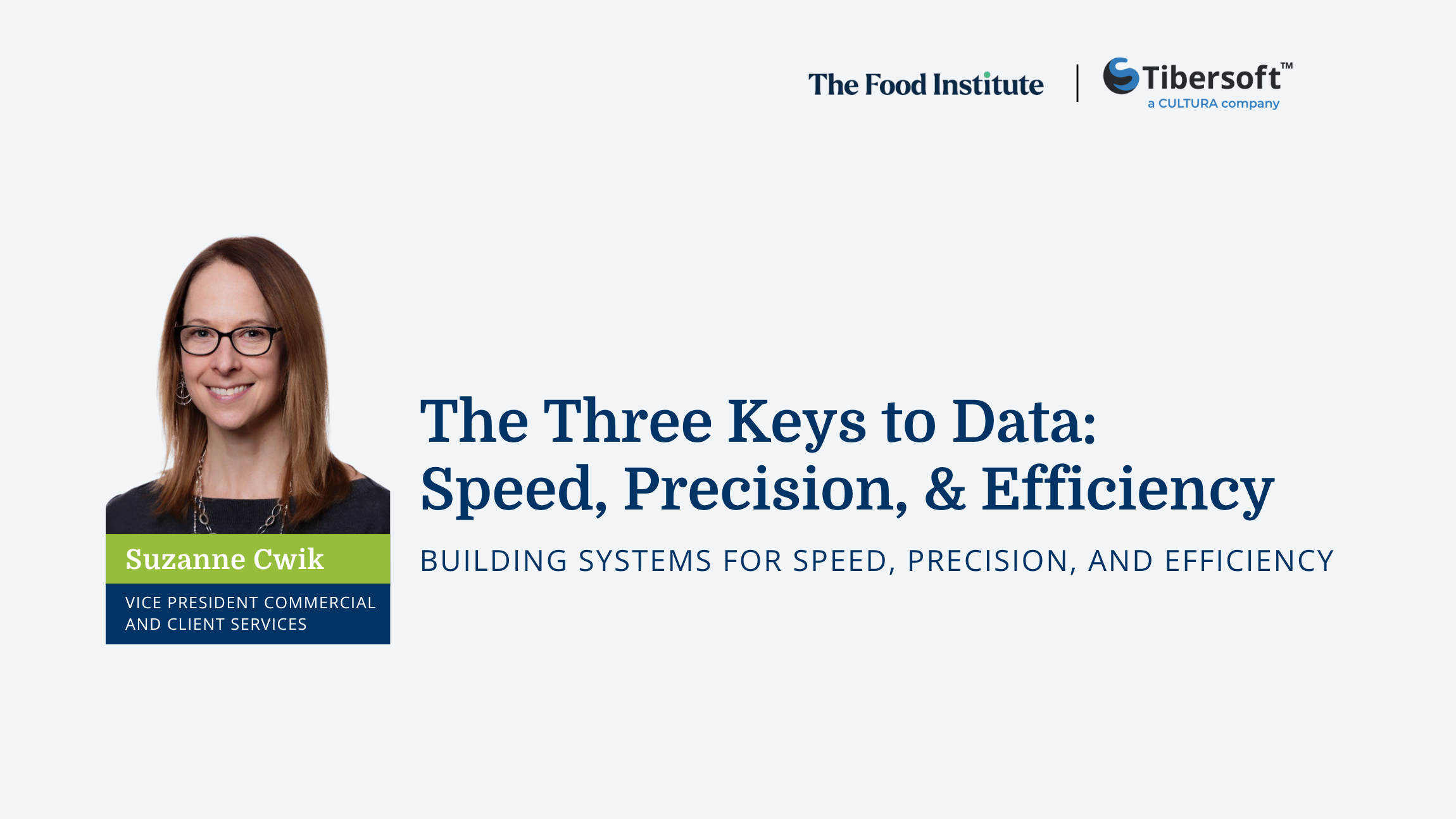
Are your sales teams operating with instinct or intelligence? Hitting your targets often comes down to three key factors in your data strategy: speed, precision, and efficiency. When teams are drowning in information yet starved for clear direction, growth stalls.
Our Vice President of Commercial and Client Services, Suzanne Cwik, recently joined the Food Institute Podcast to discuss how to build a data strategy that fuels sales performance. Drawing on her experience managing trade strategy for industry giants like Sara Lee and Kellogg’s, Suzanne shared a clear vision for the future of FAFH data management.
Listen to the full conversation here
From Too Much Data to Actionable Insights
The central problem facing sales teams is not a lack of data, but what Suzanne calls a lack of “actionable direction.” The industry’s progress with digitized systems has created a new challenge, as trade claim data can still lag by a month or even a quarter. That delay, once tolerable for simple trade payments, is now “untenable” for modern sales execution. This forces a difficult choice for sales managers, who must decide between acting quickly with incomplete data or waiting for the full picture and risking that the opportunity has passed.
Building a Data-Driven Sales Culture Through the Human Element
One of the most powerful insights from the conversation is that even the best data is “just noise” without the right people and culture to interpret it. Building a high-performance sales team requires a unique blend of skills.
Suzanne explains that Tibersoft’s most successful clients pair technical analysts with commercially minded experts who understand the business context of trade programs and supply chains. She describes the ideal team as a “50-50 mix of data, data fluency, and Food Away from Home expertise.” True success extends beyond hiring analysts. It requires creating a culture where every sales rep feels empowered to use data to make smarter decisions.
A Practical Framework for Sales Execution
When data speed is out of reach, Suzanne recommends that sales teams improve efficiency by leaning into the “Jobs to be Done” framework. For a sales manager, this means starting with a specific task, such as prioritizing a call list for the week. This approach shifts the focus from building more dashboards to enabling better decisions. It reframes the core question from “what data do we have?” to “what action do we need to take?”, which creates clarity and helps teams move from guesswork to decisive action.
Empower Your Sales Team
The task of improving data processes can feel intimidating for sales leaders. Suzanne’s advice is to avoid trying to “boil the ocean,” and instead “light a few well-placed fires.” The podcast outlines several practical first steps, with a key takeaway being the importance of empowering your “field or broker teams with digestible, prioritized outputs”. Distilling complex data into clear next steps is the goal, so your team always knows the best action to take to drive growth.
To hear the full conversation and get a deeper understanding of these strategies, listen to the full episode.
If you are ready to grow your sales in the FAFH industry, let’s connect.